


Danny McGrain's Alzheimer's Diagnosis: The Stories the Celtic Support Should Keep Telling
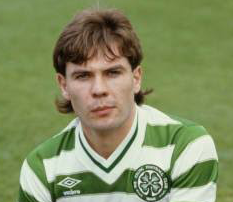
Last Tuesday afternoon. I was sent a link to Celtic's official website. Green banner, crest, sponsor logos along the top, and I clicked it the way I click all of them, expecting a squad number or a ticket ballot or somebody's hamstring.
Danny McGrain has been diagnosed with Alzheimer's disease.
I read it twice. I think most of us did.
Here's my admission before I go any further. I never saw him play. I was born in 1983, and he played his last game for Celtic in May 1987, which is to say he was gone before I had set foot in a school. Everything I have of Danny McGrain arrived secondhand. Uncles. Older cousins who had been there and never let you forget it. Grainy footage taped off the telly and then taped off the fella who taped it. Anybody my age or younger is in the same boat. We didn't watch him. We inherited him.
Which is rather the point. Danny McGrain gave us the memories in the first place. Not his own. Ours. Every one of them belongs to somebody who was actually standing there, and those people have been handing them on for half a century, to sons and nephews and neighbours who never saw him kick a ball. We pass them round as though they were our own. By now, I suppose they are.
So here are the ones we tell. I've heard most of them a hundred times and never twice the same way, which is how you know they matter to us.
There's the Quality Street Gang, the boys who came through in the wake of Lisbon and were supposed to be the next lot. Dalglish, Davie Hay, George Connelly, Lou Macari, and Danny. Training every day against men who had just won the European Cup, which is an education you cannot buy. Even in that company, by the club's own reckoning, it was him and Dalglish who stood apart. He had signed on the 13 May, 1967, twelve days before Lisbon. He was still there twenty years later.

There's the noise. Not the tackles, though he could tackle. The noise. Danny McGrain on the ball and the ground lifting before anything had actually happened, rising with him as he went, because they knew what was coming a full second before the winger in front of him did. That's the bit the footage never gives you. Not the medals. A stadium anticipating one man. He attacked from right-back before the job had a name for it, against wingers who were permitted to kick him and did.
There's Brockville, the 25 March, 1972. Up for a ball with Falkirk's Doug Somner. Heads met. He came round on the grass with the sponge already on its way, and he played on. The fracture in his skull was diagnosed afterwards. He was twenty-one, with ten league games to his name, and he started the following season as Celtic's first-choice right-back.
There's the tap. Half-time at a World Cup in the summer of 1974, and the man is lying underneath the tap they use for washing the boots because he cannot get enough water into himself. "I couldn't get enough fluid in me," he told The Scotsman years afterwards, in the tone you'd use for a bad night's sleep. He came home from Germany two stone lighter. Diabetes. Insulin from then on.
He played another thirteen years.
And there's the armband. Ten men at Celtic Park in May 1979, a goal behind, Doyle sent off, and a league taken 4-2 on a Monday night. Love Street in 1986, five past St Mirren while Hearts came apart at Dens Park. Club captain for a decade, and he had it for both of them.
The club's own count of the whole thing: seven league titles, five Scottish Cups, two League Cups, six hundred and sixty-three competitive games for Celtic between 1970 and 1987, and sixty-two caps for Scotland.
You don't have to take any of this from me, mind. I wasn't there for a minute of it. Take it from Hugh McIlvanney, who watched everybody and flattered nobody, in the line that gets quoted every single time Danny's name comes up: anyone who saw McGrain at his best knew they were watching a great player, one with probably "no superior anywhere in the world."

Part of why this one lands the way it does is that the men who built all of this are getting older, and we are starting to lose them. Billy McNeill went in 2019. We lost Denis Law in January of last year. Research at Glasgow University led by Dr Willie Stewart found that footballers of that generation were around five times more likely to develop Alzheimer's than the rest of us, and the game still owes them a proper answer on that.
But the answer available to the rest of us is the ordinary one, and we're already good at it. We tell the stories. In kitchens, in cars, on the road to away games, to people who were never there to see a minute of it. That's what has kept Danny McGrain in the present tense for fifty years, long after the last of the footage went fuzzy.
So we keep going, and we do it where he can hear us.
This was his family's call. Laraine and his daughters, Vicki, Dawn and Carly, decided to go public through the club so that the Celtic support can keep showing him the love he has, in the club's words, given "so freely and humbly to others throughout his life". The club says he remains in good spirits, enjoying time with his loved ones, and still following the game.
So tell them. Tell somebody too young to have seen it. Tell them about the noise coming up before the pass was played, about the tap at half-time and the thirteen years that came after it. Tell it badly. Get the year wrong. It'll still be his.
Danny, away and enjoy your game.
We'll keep telling them.


Comments